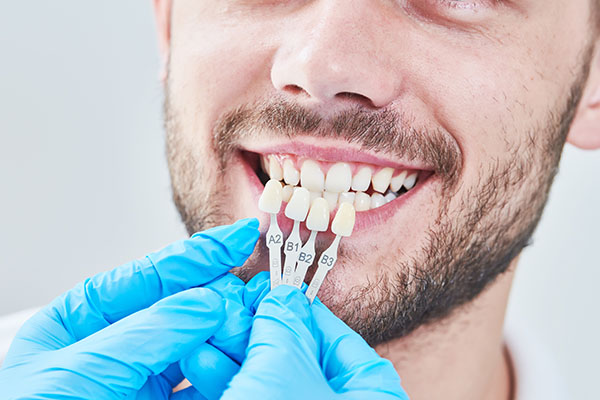
Dental veneers, ceramic or composite shells that fit over teeth to restore damage or make cosmetic corrections, are a long-lasting, durable treatment, but do eventually need to be replaced. This guide covers some of the questions patients often have about replacing this dental work.
Dental veneer replacement
Not every set of veneers lasts the same amount of time, but the average useful life is 10 to 15 years. Once the appearance or function of the treatment has degraded, patients need to have it replaced.
Reasons veneers need to be replaced
Veneers can wear down, suffer damage or become stained or discolored over time in the same way that natural teeth do. This process may be accelerated by physical trauma to the mouth, tooth decay, poor dental hygiene, smoking or consumption of staining food and drink, such as blueberries or coffee. Additionally, the treatment sometimes needs to be removed so that the dentist can access teeth that need dental work.
The replacement process
The process of replacing veneers is very similar to the process of initially placing the treatment. The dentist begins by carefully removing the existing dental work so that the process does not damage the underlying teeth. Once it has been removed, the dentist cleans the teeth. The dentist may then remove a small amount of the tooth surface to make it easier to adhere to the new dental work.
Next, an impression is made of the tooth or teeth and sent to a lab. The lab typically takes one to two weeks to manufacture the replacement set of shells. When the lab is finished, the patient returns to the dentist to have the new treatment applied and adjusted for fit.
4 tip for maintaining dental veneers
New veneers eventually need to be replaced as well. However, there are steps the patient can take to prolong the life of the dental work.
1. Brush at least twice per day
Bacteria and plaque can build up on the veneers throughout the day. Regular brushing with a soft toothbrush and nonabrasive toothpaste removes this buildup and helps prevent tartar from forming on the dental work. It also helps maintain the health of the underlying natural teeth.
2. Do not smoke or use tobacco products
Smoking or chewing tobacco can stain both the natural teeth and the veneers. Stains not only change the appearance of the dental work but can lead to a color mismatch between the treatment and the natural teeth.
3. Floss at least once per day
Flossing helps remove food debris between the teeth that can cause decay. It is recommended to floss at least once per day, but to increase effectiveness, floss after every meal.
4. Avoid chewing on hard food or objects
Chewing on hard food or objects, such as ice, pens, or fingernails, can chip or crack the veneers. Avoid chewing on non-food objects and proceed with caution when consuming hard foods.
Conclusion
Normal wear and tear and damage caused by trauma or daily activities make it necessary to replace veneers. However, patients can take steps to prolong the life of the dental work.
Request an appointment or call Dental Studio Colleyville at 817-885-5188 for an appointment in our Colleyville office.
Recent Posts
Dental laminates are a minimally invasive and effective way to correct imperfections while keeping the natural teeth strong. However, choosing to improve a smile is a big decision for many. Most patients want a better look without losing their healthy, natural tooth structure. The good news is that this modern dental service makes it possible…
Dental laminate treatments offer a minimally invasive solution for patients looking to enhance their smiles. Both dental laminates and veneers improve the appearance of teeth by covering imperfections such as discoloration, chips, and minor misalignments. While these treatments serve a similar purpose, their differences impact durability, preparation, and overall aesthetic outcomes. Understanding these distinctions can…
Veneers are artificial tooth coverings made of porcelain or resin that can improve a patient’s smile. Only fixed to the surface of the patient’s natural teeth, these dental appliances can be used to repair a majority of aesthetic issues, such as chips, stains, or cracks. Getting any dental treatment that mends problems with a smile…